
Blue Therapy
Summertime with the water

Summertime has always meant a lot of water activities for me. Growing up mostly in northern Minnesota, the state with 12,000+ lakes, it was ingrained in us to be on the water as soon as the ice melted. We looked forward to swimming, boating, tubing, fishing, canoeing, etc.
Wherever we have lived, I've always had a longing to be out on the water in the summer. That wasn't always so easy in places like Rhode Island and Connecticut. Although they are surrounded by oceans and bays, it meant being in a traffic standstill to get to many of the beaches in summertime. We were more likely to go in the offseason months — just to walk and enjoy the scenery. We often didn't feel like we got our summer water fix until we'd go back to Minnesota to visit — although we did find good places to canoe in Connecticut but they weren't necessarily swimming places.
And then we moved out West to the high desert of Washington state. There, the mighty Columbia River traveled through the Tri-Cities where we lived. But once more, it wasn't accessible in the ways we preferred — although again we did find an area for canoeing and we eventually also found a swimming alcove with quiet water away from the strong river currents. And so, we'd get our summer water fix when we went back to Minnesota for all the activities we grew up with.
However! when we first visited the Oregon coast, we got a big dose of “blue therapy” that felt like getting away from it all — similar to Minnesota's lakes but in a wild and vast way. It wasn't necessarily a swimming situation, but there were such pristine uncrowded beaches and gorgeous tree-covered mountains and hills spilling to the sea. Ah, water’s calming effect at the greatest ocean on the planet!
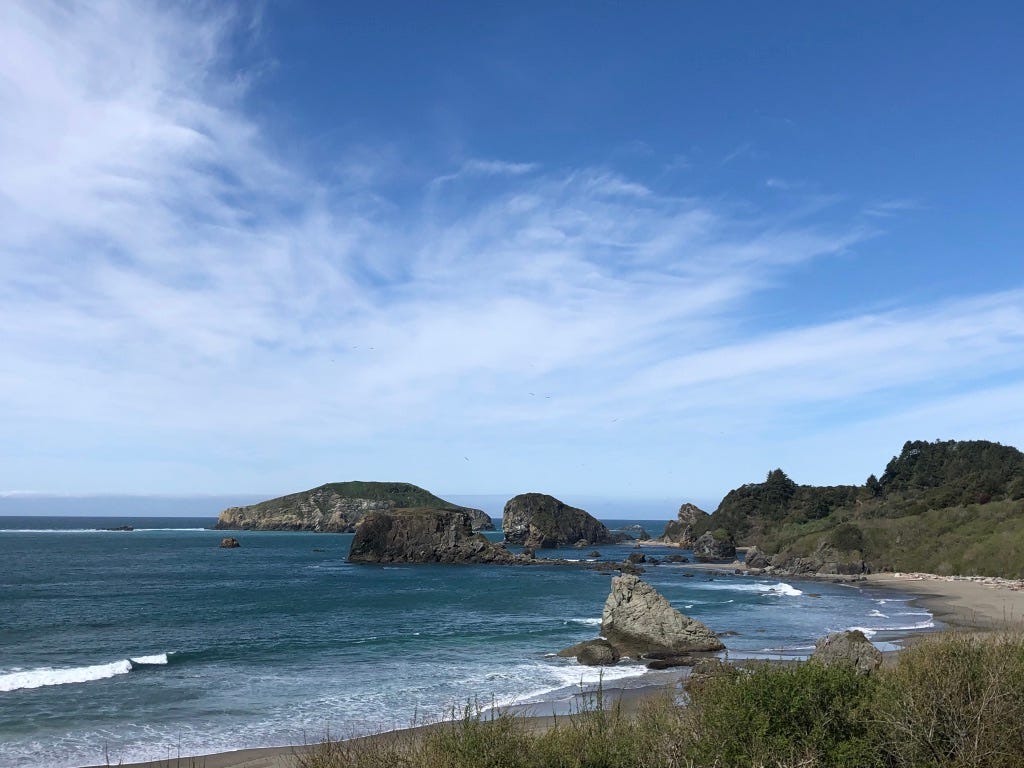
When we eventually moved to Oregon, we were thrilled to be only one hour's drive from the ocean through the coast mountains and on to the rugged beaches. And we also found a reservoir where we could sail and be on the water all day. We eventually moved back to Minnesota and enjoyed lake life aplenty both at my father-in-law's cabin and also with our little town lake across the street from our house. Although a good part of the year the waters are solid and thick in Minnesota (!), all those summer months get packed with as much water activity as possible.
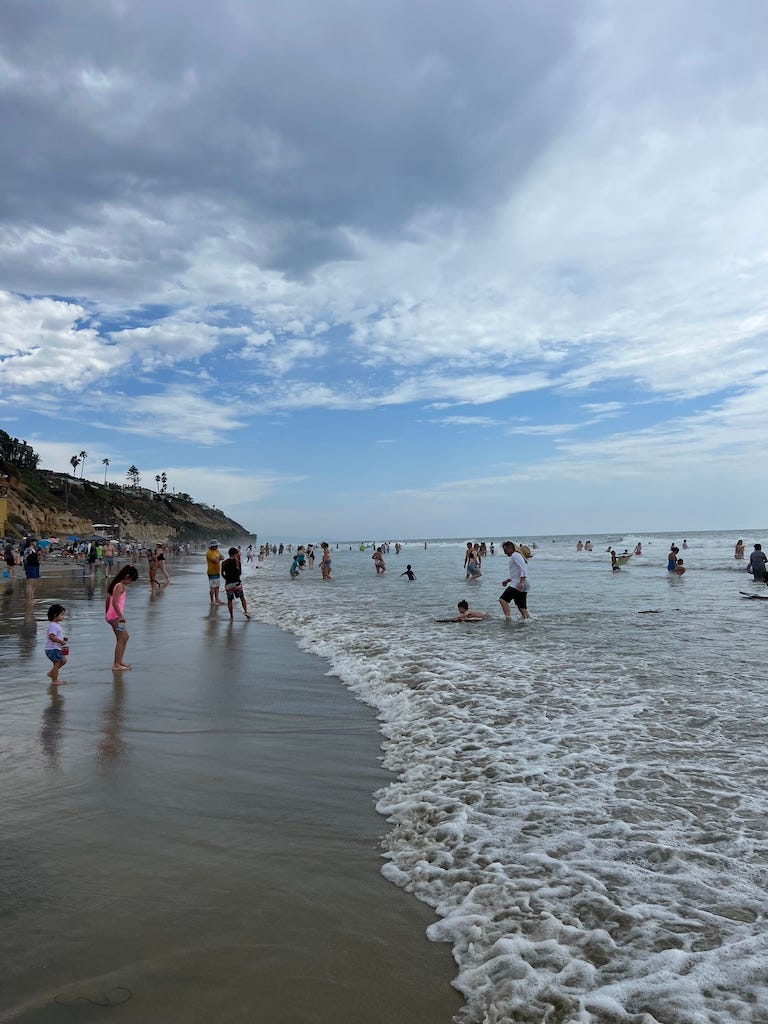
And then we moved on to Southern California and back near our favorite, the Pacific — once again only an hour away. While not as windswept, rugged and undeveloped as the Oregon coast (or even the Northern California coast), there are gems along our shores that I've written about. What I especially love is that the ocean is warm and swimmable.
On Sunday, we were at Moonlight Beach and the water was 70 degrees. It was so fun to play in the waves and boogie board. And I also love to just walk and walk beside the cliffs and be awash in all the ways the ocean soothes the senses — sweeping away the noise of life.
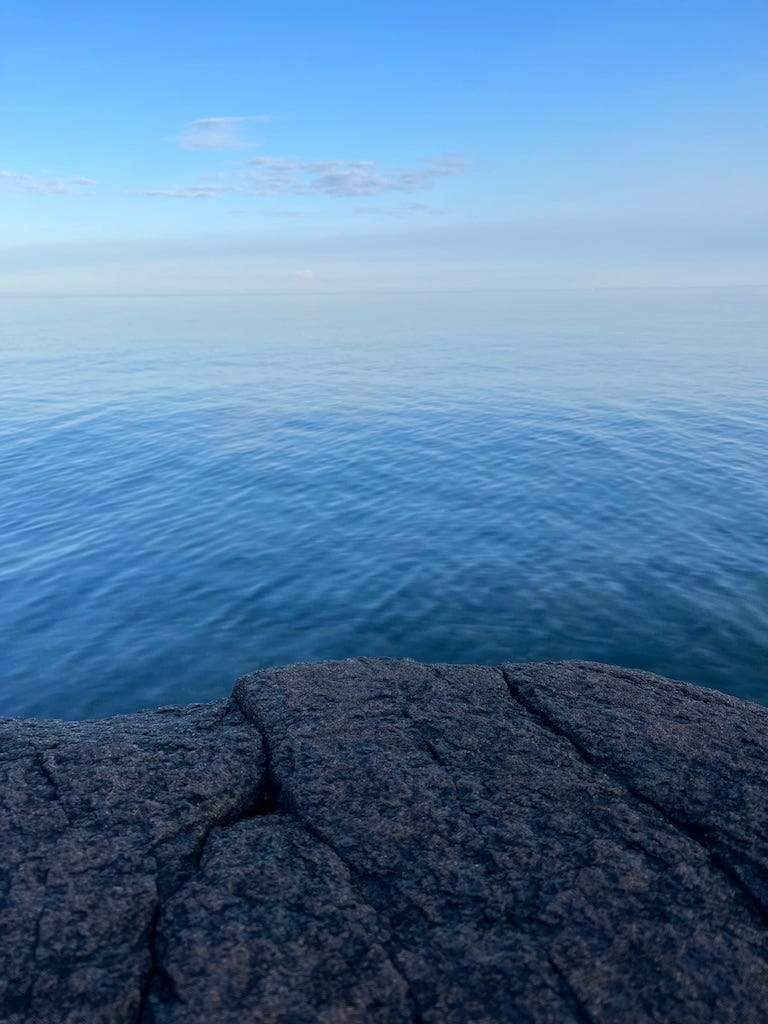
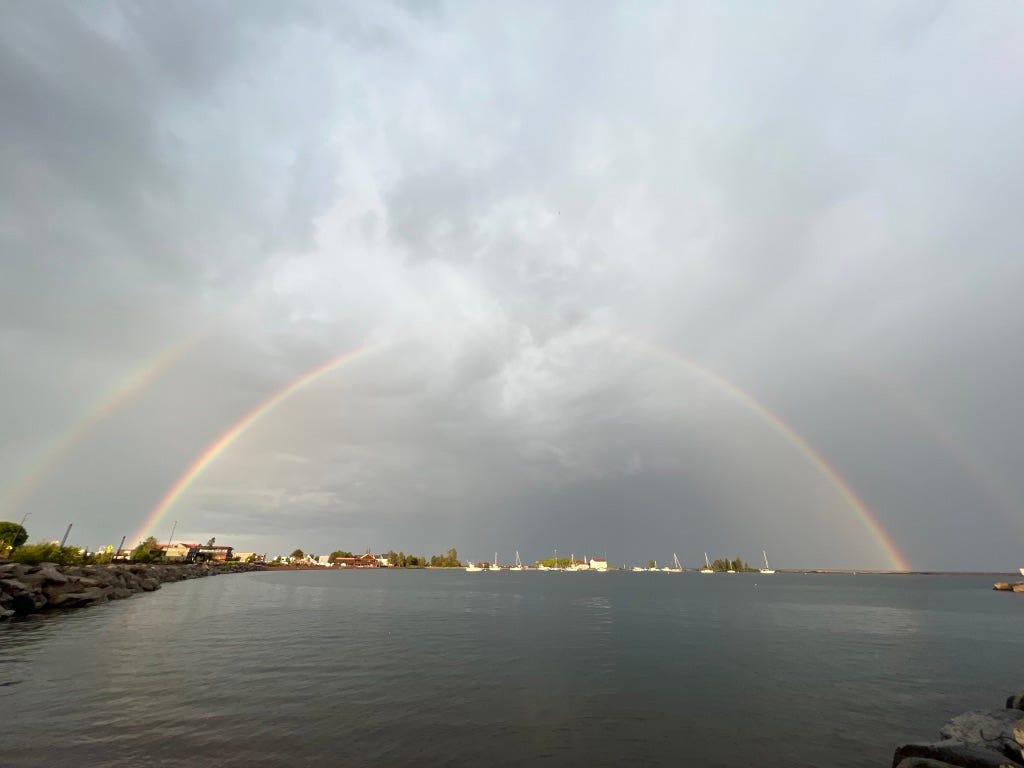
Some of my fondest memories with my family are times we spent by the water. Just a few weeks ago, we stayed at an off-grid cabin on Lake Superior’s North Shore, just south of the Canadian border. The great Lake Superior is called Gitchi-Gami (or several other variations of spelling) by the Native American Anishinaabe people. It means “big sea” or “huge water”, and it is immense — the largest freshwater lake by area in the world. At the place we were staying, there is no shore visible across to the east. I would go out in the morning, and multiple times during the day, and sit on the ledge rocks and just gaze. Because Lake Superior doesn't have tides, the water can sometimes be so still right next to the shore. It feels like it's rising up to greet me, like it's swelling in its basin somehow. Practicing my Qigong movements there, I felt a lot of Spirit energy, which to me feels like full body shivers and tingles. And I thought of the Anishinaabe who look to the lake for their way of life and inspiration. It has a powerful energy that really refreshed me — enjoying the simplicity of the vast, clear waters which were sometimes rippling with a cross-hatch pattern and sometimes crashing with white waves onto the rocks.
But did we go in? Not this time! With water at 48 degrees, it didn't exactly call out to us in welcome. At least not this time, as I said… Two years ago on an unusually warm July, the water was 70 degrees at Temperance River State Park, and we all jumped into the crystal clear lake as the sun sank and the moon rose. We only had one day on the North Shore on that trip, and it was sublime. We ended it the way we hoped: with an isolated beach to ourselves.


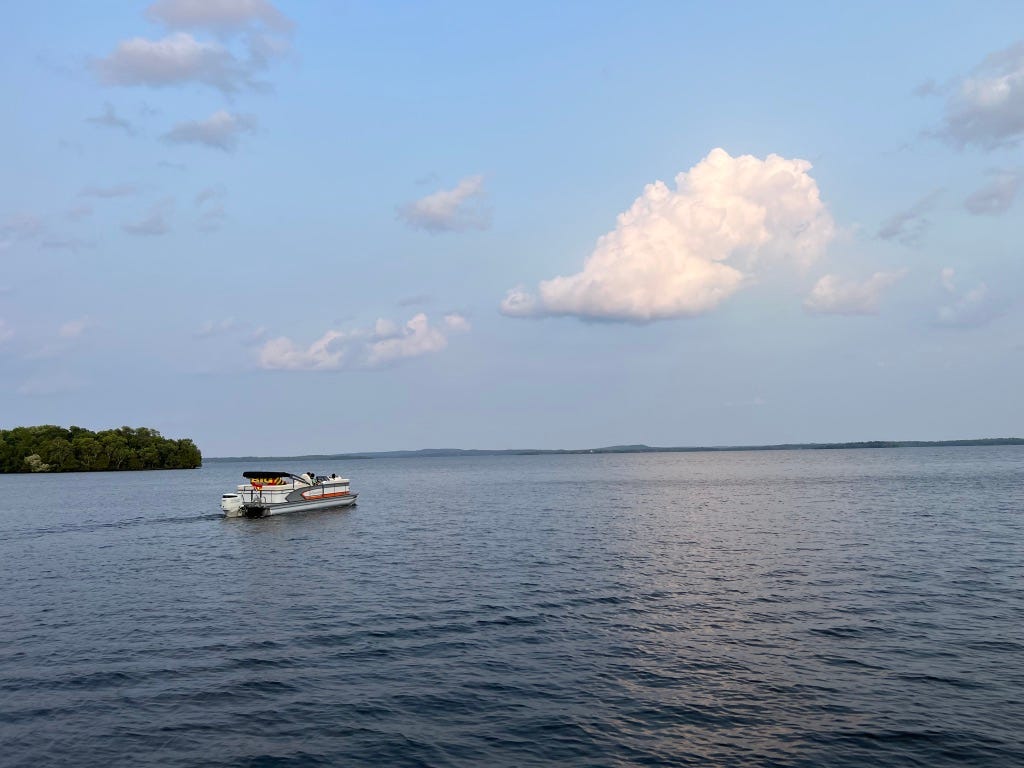
While we were in Minnesota a couple weeks ago, we also stayed on our favorite Lake Vermilion at an aunt and uncle's cabin. There, we did a lot of sauna-ing and jumping in the lake after a good steam. We went on the boat and pulled the kids on tubes behind it. The kids went paddle-boarding too. And I enjoyed my morning Qigong on the dock with the lake “rising up to greet me” and the Spirit energy I feel near the water. It was very good.
In By the Sea, a book I read a few years ago, bought at a Cannon Beach Oregon bookstore, I learned about Attention Restoration Theory (ART) proposed by Rachel and Stephen Kaplan. It’s a fancy name for viewing a soothing environment, allowing our brains to rest and mentally recover from stress and all the attention our nervous systems must give to modern life.
They share that for an environment to be restorative it should have four components:
1. Fascination - some aspects of the environment must hold one's attention effortlessly. ‘Soft fascination’ is thought to be the most important component: softly fascinating stimuli, such as waves breaking on the shore, require little attention and enable mental reflection.
2. Being away - there must be an element of getting away from it all. The environment must be psychologically or physically removed from a person's daily routine.
3. Extent - the environment must have enough content and structure that it feels like being immersed in another world.
4. Compatibility - it should be an environment that a person wishes to be exposed to and engage with.
Also in By the Sea, author Deborah Cracknell couples intuitive understanding of water’s positive effects on us with numerous scientific findings. She touches on the famed Blue Zones: areas of the world in close proximity to oceans where populations tend to live longer and have better quality of life. And she talks about Blue Health: the many mental and physical health benefits of engagement with watery environments.
It was an interesting read with many beautiful photos and affirming facts. For my part, it also comes down to vastness in being near big water — something so much larger than me and my mind chatter. It puts me in more of an observer state which tends to reset and regulate the nervous system.
I'm really thankful for all the watery goodness the Creator provides. I'm thankful there's a restorative therapy of sorts in being on, by and in the water. I wish us all a blue health summer.
For peace,
Jen
Other posts like this:
A very peaceful read ... your amazing ability to share your water calmness to others through your words. 💕
This is beautifully written! I love it🤍